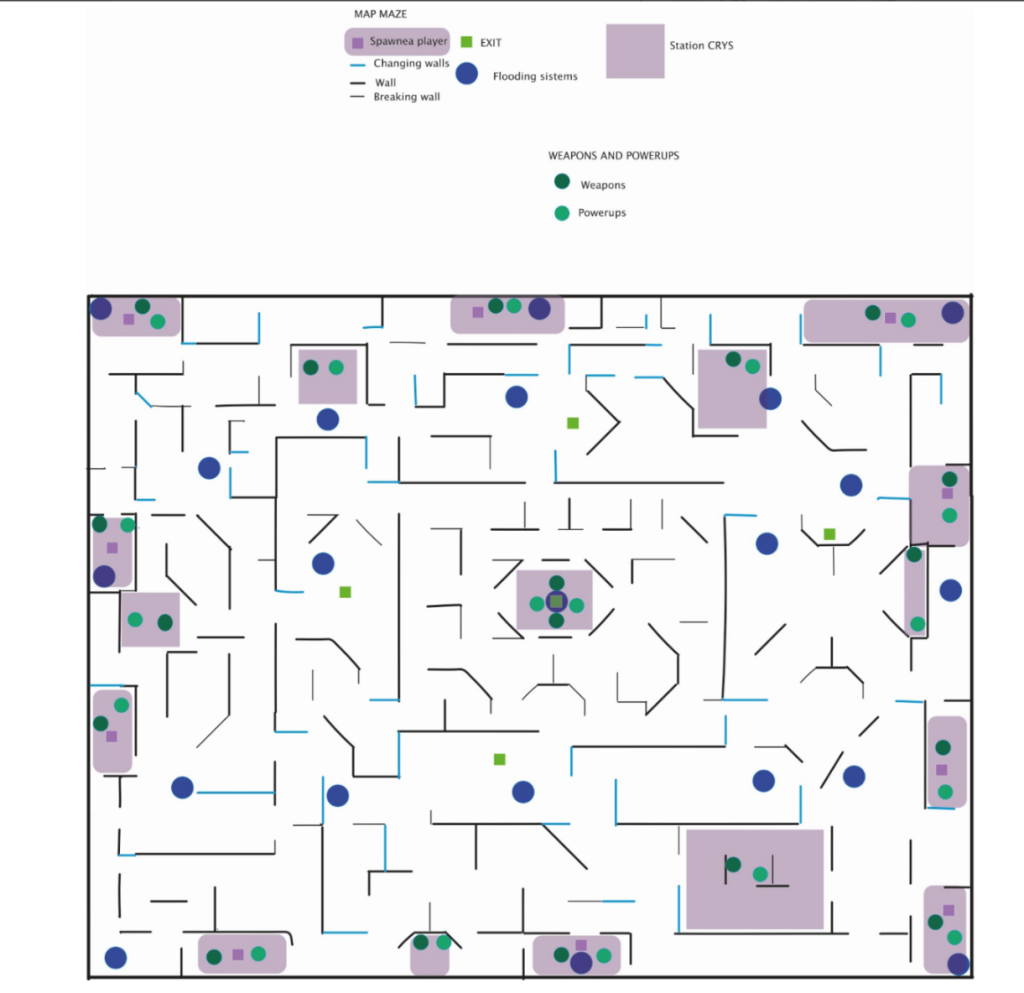
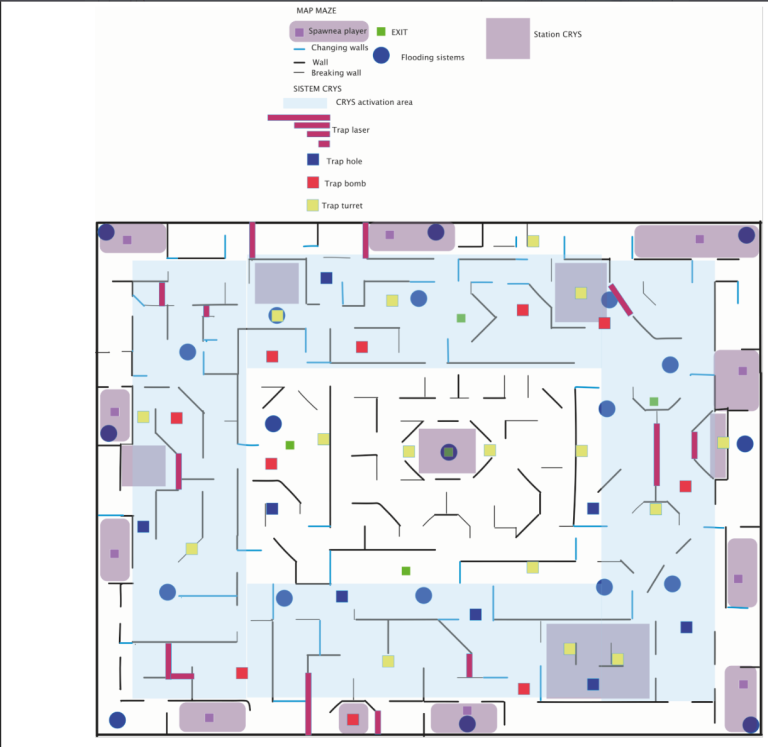
Prototype
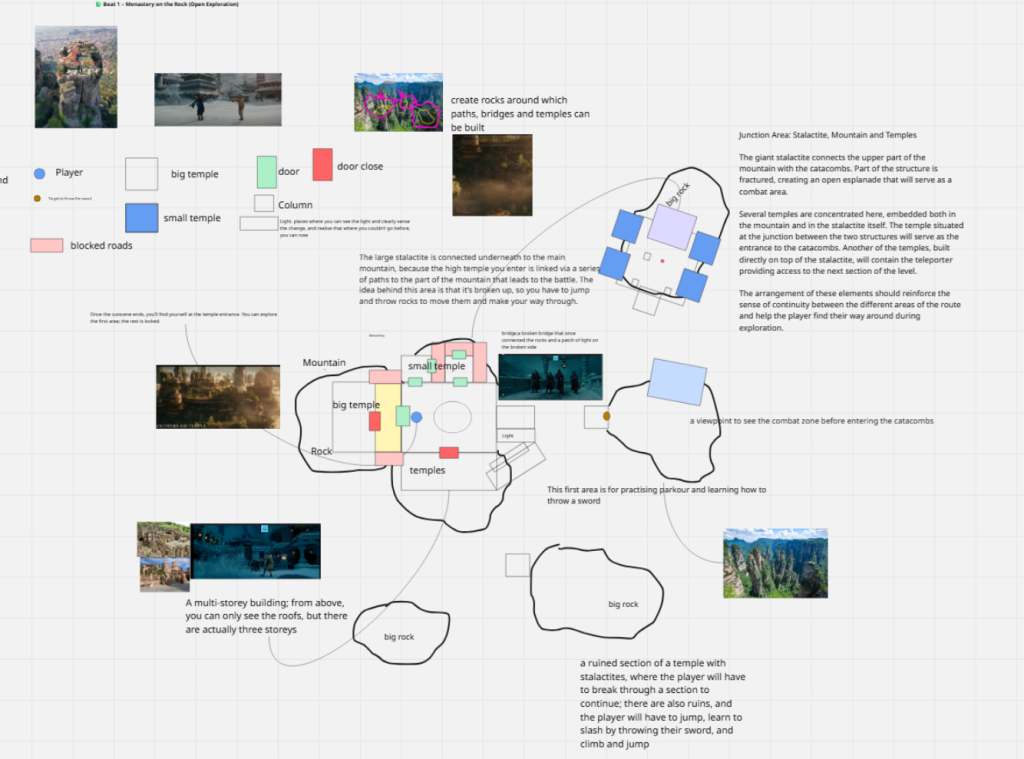
Level flow prototype for a single-player narrative sequence, blending guided exploration
with open traversal challenges.
– Designed a junction area (stalactite, mountain and temples) where a giant fractured
stalactite links the upper mountain to the catacombs, creating an open esplanade used
as a combat arena
– Placed multiple temples along the route — one at the junction as the catacombs entrance,
another atop the stalactite housing a teleporter to the next section — to reinforce
continuity and player wayfinding
– Built the entry zone as a traversal tutorial, teaching parkour and the sword-throw
mechanic before combat is introduced
– Used a broken bridge and scattered rock platforms to gate progress, requiring the
player to jump and throw rocks to clear a path
– Added a viewpoint overlooking the combat zone before the catacombs entrance, so
players can read the space ahead
– Designed a multi-storey ruined temple (3 floors, only rooftops visible from above)
to add verticality and hidden depth to exploration
– Iterated on pacing between fully open exploration vs. a more guided route to control
difficulty and readability
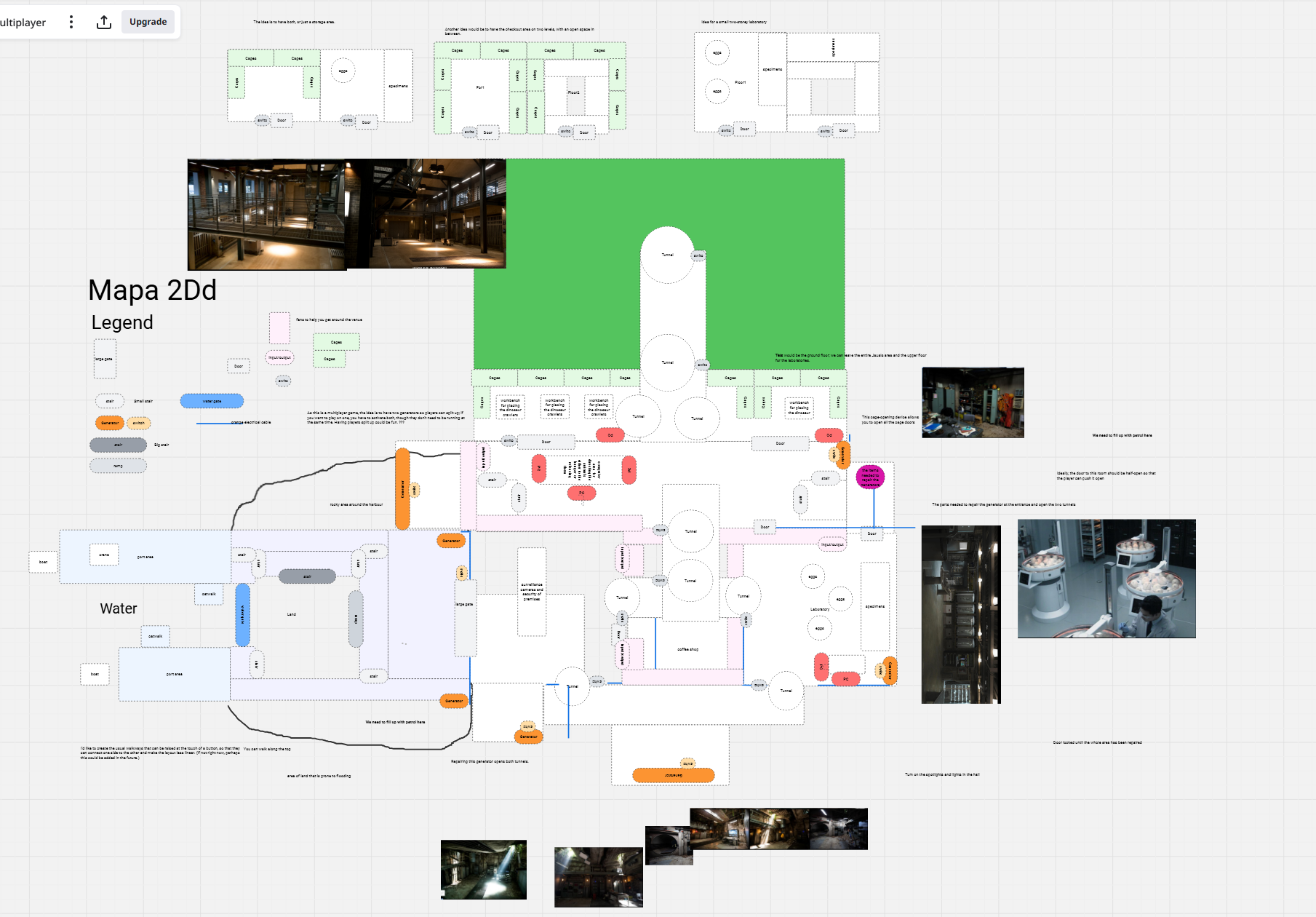
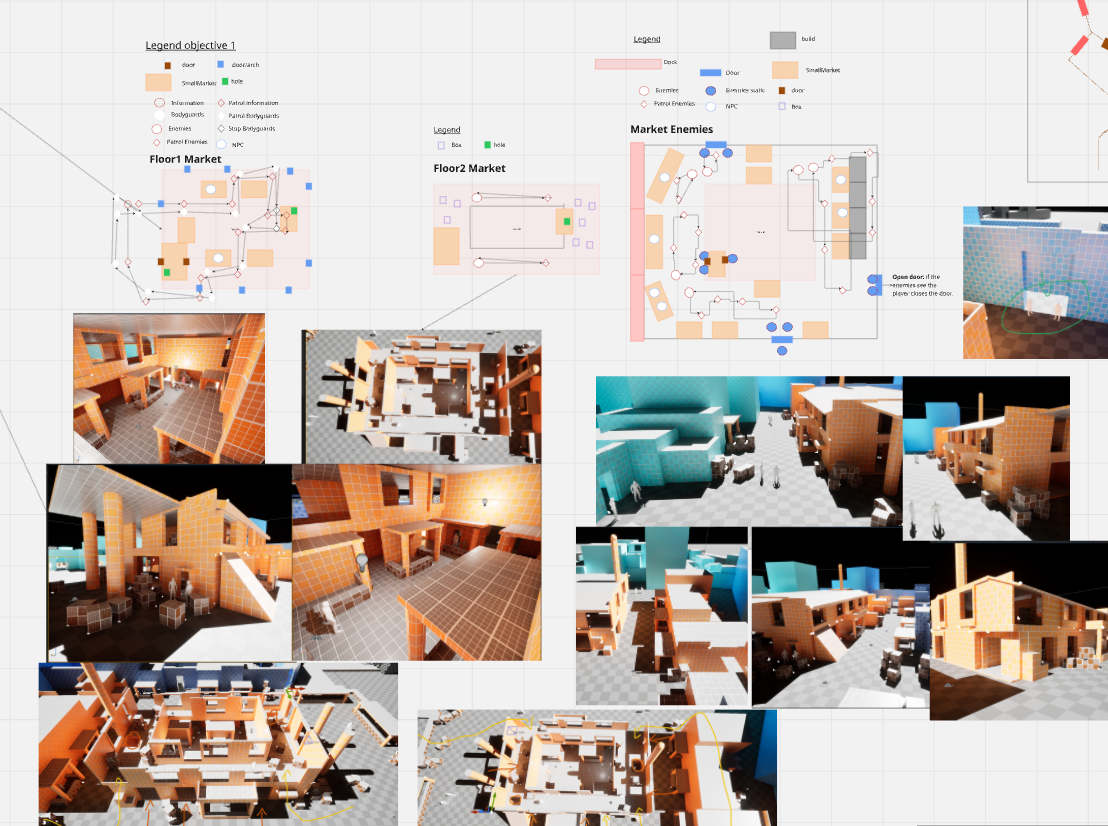
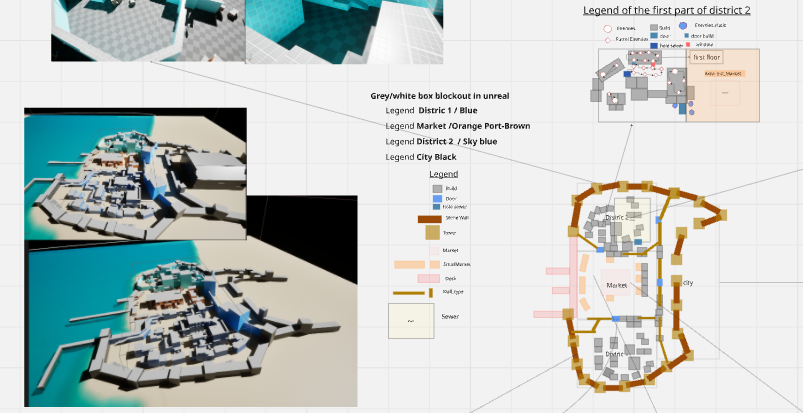
Top-down layout for a multiplayer objective-based level set in a research/holding
facility, combining stealth, patrol systems and generator-gated progression.
– Designed generator-gated progression: repairing generators unlocks tunnels, doors
and lighting across the facility
– Planned split-role multiplayer support (two players can divide objectives, or one
player can run both roles solo)
– Placed patrol routes and security systems (cameras, guarded generators) around key
chokepoints — harbor, tunnels, laboratory
– Laid out functional zones — holding cages, workbenches, laboratory, specimen storage —
supporting a facility-management/heist loop
– Added a flood-prone zone and a player-reset mechanic near the catwalk, testing whether
that route should stay linear or open
Mission
MISSION DESIGN — MULTI-ROUTE LEVEL
Personal Design Exercise · Stealth / Action
Mission design with multiple routes and free-style gameplay.
I designed a mission focused on the player’s freedom of choice, where every decision – from exploration to combat – influences the development and difficulty of the experience. The level begins with a narrative introduction and covert tutorial that establishes objectives, parkour mechanics and verticality.
The environment is structured in interconnected zones with multiple entrances and routes: rooftops, interiors, sewers and streets, always offering at least one undetected “ghost” option. The player’s decisions – total stealth, lethal stealth or direct action – affect the number of enemies and the behavior of the environment in the following areas.
The final objective, an assassination, can be executed in different ways, adapting to the chosen style. The design encourages replayability, rewards observation and strategy, and makes the player feel like a true assassin with mastery of space.
Unity → Unreal Engine 5 · PvP& PvE · Arena / Battle
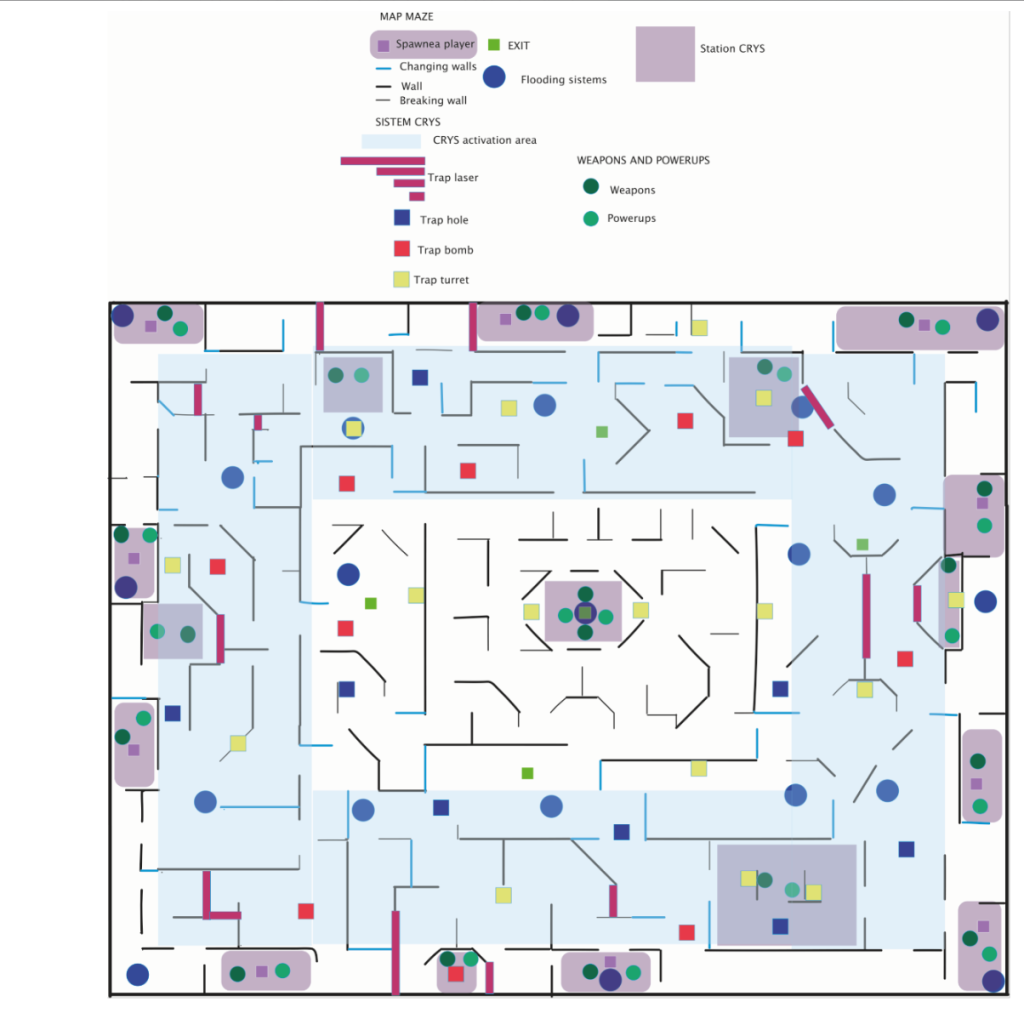
Gameplay of the GroundZero. If you want to play click on the button below.
Ground Zero
Witness the Future of Gaming – GroundZero: A Vision Unveiled*
Greetings, esteemed players and enthusiasts! Step into a redefined world, a vision that never came to be: GroundZero. In this advanced era of 2030, a metamorphosis has befallen society, demanding a new form of entertainment to captivate the masses. Picture a world divided into eight dominant factions, each vying for control: Fire, Air, Water, Rock, Metal, Spirit, Clover, and Volcano. This is the backdrop of GroundZero.
Immerse yourself in a world where survival dictates fame and wealth. GroundZero stands as the epitome of this cultural shift. Do you dare to enter the fray? The competition awaits: click below to experience the gameplay (unfortunately, it remains a testament to what could have been).
The Journey: From Unity to Unreal 5 – A Technological Leap
Originally conceived in the Unity engine, GroundZero embarked on a transformative journey, harnessing the unprecedented power of Unreal Engine 5. The intent was to elevate the gaming experience to new heights, embracing the cutting-edge features and capabilities of this remarkable platform.
The migration to Unreal Engine 5 offered a glimpse into the future of gaming, promising unparalleled graphics, mechanics, and immersive gameplay. Sadly, the transition and its associated costs proved insurmountable, leading to the project’s untimely cancellation.